

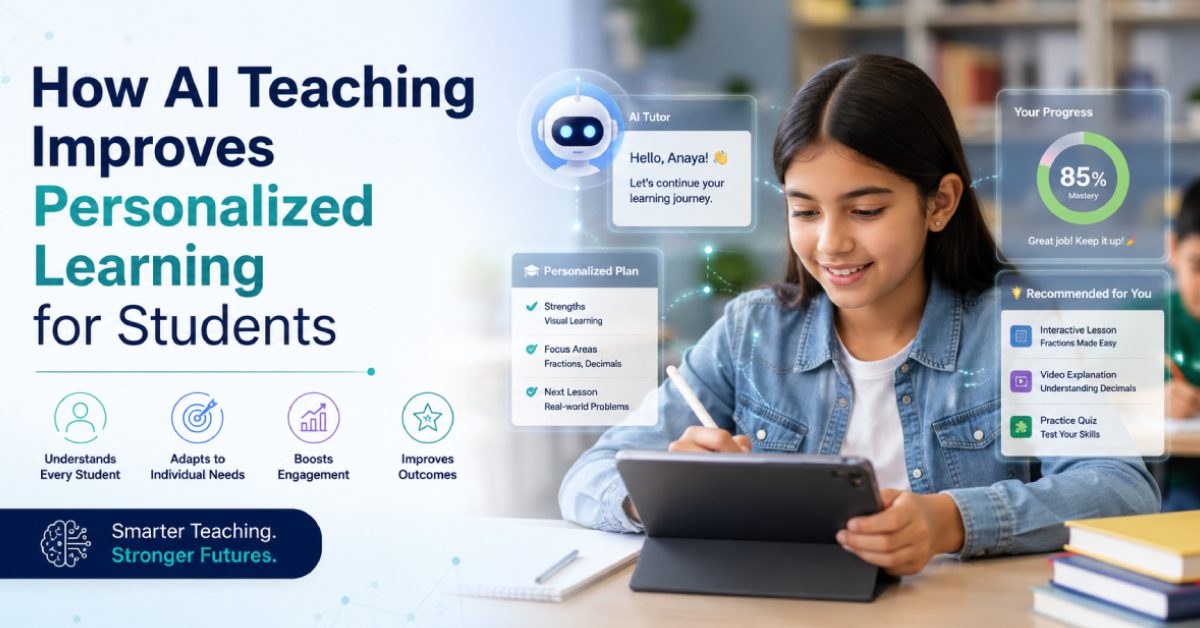
The education industry is going through a revolution brought about by technology, and one of the most revolutionary technologies today is artificial intelligence. The introduction of artificial intelligence into the process of teaching has greatly contributed to the effectiveness of education systems since they have been able to incorporate personalized learning programs.
Understanding Personalized Learning
Each individual has unique learning capabilities. While some learners understand things fast, others take more time and need guidance and assistance to learn. Standard approaches for teaching that apply in conventional classroom settings are rigid and do not cater to everyone’s learning requirements. Personalized learning refers to designing education around a student’s capabilities and preferences.
This can be simplified with the help of AI technologies as they provide information about the performance of the learners and recommend the appropriate way of learning.
How AI Enhances Student Engagement
One of the important strengths of AI technology in the learning process is the increased interactivity that comes with it. AI-driven tools use quiz games, educational video content, and immediate feedback mechanisms to increase learner engagement in class lessons. The interactivity associated with such forms of learning encourages learner motivation and comprehension of hard concepts.
Another way in which AI helps improve student engagement is through customization of learning material to the individual student. If a particular student finds it difficult to grasp mathematical concepts, then the AI tool could simplify things for them by providing easy-to-grasp explanations and more practice sessions.
Real-Time Performance Monitoring
Thanks to artificial intelligence, teachers and schools are able to keep track of the performance of the learners in real time. Artificial intelligence systems are capable of collecting performance data such as the attendance records of students, assignment submissions, test results, and their levels of classroom participation.
Such data will give the teacher an idea regarding the way a learner learns in class, which will help in giving him/her assistance whenever necessary.
Supporting Teachers in the Classroom
AI will not replace teachers, but assist them in making their teaching process easier and more efficient. Automated systems for grading assignments, automated lessons creation, and other applications for performance analysis save a lot of time for teachers, who can then spend more time on interaction with students.
Many educational institutions, including an AI teaching school in Rajouri Garden, are exploring AI-based teaching methods to improve learning outcomes and provide modern educational experiences for students. These schools are integrating smart technologies into classrooms to create more adaptive and student-focused learning systems.
Improving Accessibility and Remote Learning
Another advantage that comes with using artificial intelligence is that it enhances accessibility in the learning process especially in remote learning situations. Artificial intelligence technology offers virtual tutors, voice recognition systems, and language translators that make it easy for the learners to access quality education even from other parts of the world.
Artificial intelligence remote learning sites offer personalized learning schedules, fast problem-solving, and feedback provision making the whole process easier and less stressful.
Conclusion
AI technology is transforming the future of learning by facilitating personalized learning in a more effective way. Using AI for teaching enables both students to get customized assistance and teachers to perform their duties efficiently. As a result of using such technology in education, the learners can be assured of an interesting learning process, which will make them ready for future challenges.
