

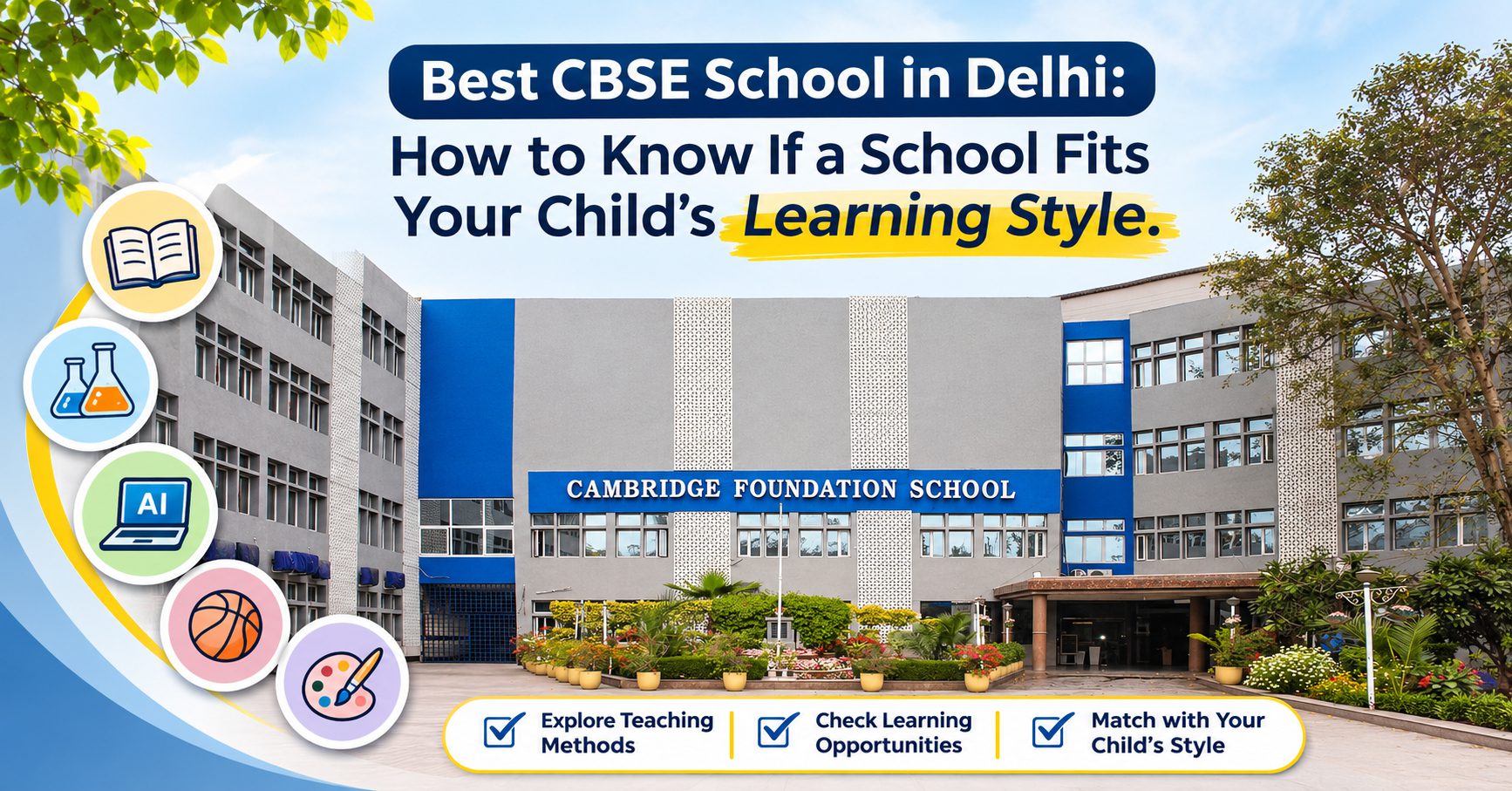
The decision to choose a school is not merely based on academic outcomes, facilities or admission requirements. Each child will have their own interests, strengths and means of understanding new concepts. Others learn best by doing something, and others learn from reading, through classroom discussion or from visual explanation. The best CBSE school in Delhi is that where the learning needs of your child are understood and fulfilled.
Develop an understanding of your child’s learning style
Children are not all the same and learn in different ways. Some love to experiment and do activities themselves, some like to read, listen to explanations or work out a problem by themselves. A combination of these approaches is effective for many children.
Refer to the way in which the children react to homework, new topics and daily issues. Ask questions, like constructing things, recall information by diagrams or like talking about something? These observations may assist parents to identify strategies that will help to maintain their child’s participation in the learning process.
But learners’ preferences vary from one topic to another and from one age to another. A school should provide different means of teaching, not stick to one learning style for a student.
Look Beyond Textbook Based Teaching
The CBSE curriculum gives a framework but the teaching in the classroom has an impact on how it is used by the students. Schools that provide multiple opportunities for students to learn about concepts through explanations and hands-on activities, group projects, demonstrations, and discussion can provide a variety of experiences.
For the best CBSE school in Delhi, enquire about the strategies used to make difficult subjects approachable for students. Discover if students are involved in experiments, presentations, collaborative work and project based learning.
This can assist children to make links between what they have learned in class and what is happening in everyday life. They can also stimulate curiosity and independent thinking and problem solving rather than just memorizing.
Assess Teacher Support and Classroom Environment
An encouraging teacher can have a tremendous impact on a child’s learning experience. All students can require varying amounts of time, support and practice to learn the same subject.
Parents should research a school’s approach to students with learning difficulties, its willingness to allow learners to ask questions and give feedback about their learning. Smaller learning groups may enable teachers the ability to provide more individual attention with students, where available.
When visiting a school, watch to see if pupils seem to be happy to join in and ask questions to understand the material. The classroom atmosphere should be positive and conducive to learning, while not causing children to fear making mistakes.
Think about Activities Beyond Academics.
Education is also outside of the lesson. Children can discover interests and develop skills that can be assessed through other means, such as through sports, music, art, theatre, science clubs and other activities.
If a child is interested in creative pursuits, it might be helpful to give him/her a chance to communicate ideas through art or presentation. A third individual who likes hands-on projects may find their interests in robotics, science projects or collaborative exercises.
As you look at schools, check to see if activities are offered that are related to or expand upon your child’s interests and allow him to try something new.
Prior to admission, ask Right Questions
Parents can pose a few practical questions before choosing a school:
- What are the methods of instruction for each subject?
- How do teachers help student who has difficulty understanding a concept?
- Are practical learning, projects and classroom discussions encouraged?
- How is progress made with students reported to parents?
- What opportunities are available for sports, arts and other interests?
The answers may help to clarify how the school is approaching the education.
Conclusion
The key to finding the best CBSE school in Delhi is to understand what your child needs to learn, participate and grow in self-assurance. Academic standards are important, but so are the way it’s taught, the support and help offered to teachers, classroom culture, and opportunities to be involved outside of school. Through your visits to school, by being aware of your child’s needs and asking the right questions you can make a more considered decision and select a school that will allow your child to progress academically and develop personally.
