

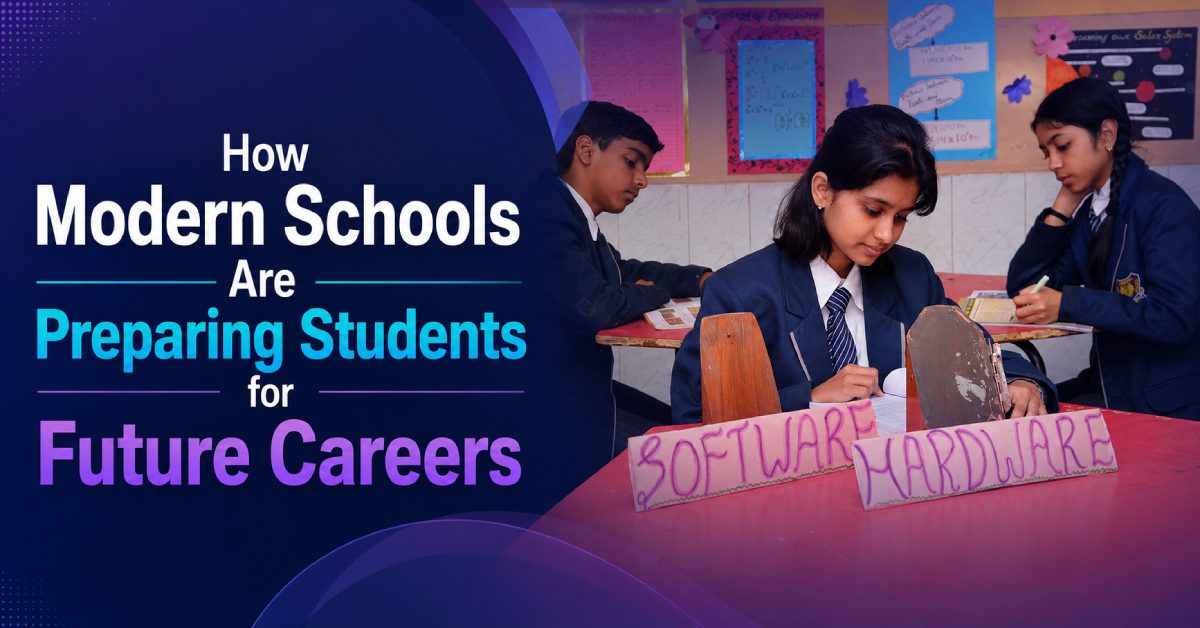
The world of work is changing rapidly. Opportunities that were not available 10 years ago are becoming available thanks to new technologies, a changing industry and changing workplace expectations. Therefore, the emphasis of schools is no longer academic excellence alone. They are also teaching students practical skills, critical thinking skills and technological knowledge, which will help them to be successful in the future. One such initiative is the adaptation of teaching schools for the changing demands, such as an ai teaching school.
Emphasis on Technology and Digital Skills
There are not many professions which don’t depend on technology anymore. Digital tools are influencing the way people work across a range of industries from healthcare to finance, engineering to marketing. Today’s schools are teaching these youngsters to code, to work with robots, to interpret data and to be digitally literate. In modern schools, kids are being introduced to coding, robotics, data analysis, and digital literacy at a young age.
An ai teaching school takes it one step further by helping students grasp the impact of AI on industries. Students are exposed to new technologies and will be familiar with the tools which are expected to be significant to their future careers.
Developing Critical Thinking and Problem-Solving Skills
Today, employers are looking for people who can be self-assured and independent thinkers with the ability to solve complex problems. In today’s schools, students are encouraged to think more, instead of memorizing.
Students will be engaged in activities that challenge them to assess a situation and come up with solutions, such as project-based learning, case studies, and collaborative assignments, which are often incorporated into classroom activities. In addition, an ai teaching school provides support for this by applying innovative teaching methods that encourage students to think in a logical manner, be creative and curious.
Building Communication and Teamwork Abilities
You can’t succeed in your career without technical skills. There is a huge importance of communication and team work in today’s working environment. Schools are establishing opportunities for pupils to engage in collaborative projects, presentations, and debate and out-of-school activities.
Students gain confidence, leadership skills and interpersonal skills from these experiences. An ai teaching school can also involve group learning situations that involve students in working in a diverse team in the workplace.
Encouraging Adaptability and Lifelong Learning
The careers of the future may require individuals to learn new skills throughout their lives. Today’s schools thus, are not just about teaching but also about adapting and learning.
Pupils are encouraged to think outside the box, welcome change and have a growth mindset. An ai teaching school allows students to learn that technology and industries are constantly changing and lifelong learning is necessary to their career.
Exposure to Real-World Applications
Many schools are working to engage class learning with real life experiences. Students gain insight into the application of academic theories and ideas in the workplace through workshops, internships, industry connections, and projects.
An ai teaching school will usually present students with real-world examples of artificial intelligence and automation, in different industries. This exposure equips students with awareness and information to aid in career selection and future workplace needs.
Preparing Students for Emerging Career Opportunities
What will be done in many future jobs will be technologies which are still developing today. Schools are fostering students’ understanding of artificial intelligence, machine learning, robotics, and digital innovation.
Including these subjects in learning process makes an ai teaching school to give students the knowledge and skills they need to be useful in the future in a technology-oriented world.
Conclusion
The education system is transforming to cater for the needs of the fast-changing jobs market. Schools are more aware of the need to train students for their future career in technology, critical thinking, communication, adaptability, and practical learning. In this transition, the role of an AI teaching school is crucial, as it guides students to prepare for a digital and innovation-driven economy by developing skills and attitudes. By learning balanced, students are being better prepared to succeed in the careers of tomorrow.
